If you’ve been teaching long enough to remember pre-2020 classrooms, you know something shifted.
It’s not just phones.
It’s not just curriculum.
It’s not just “this generation.”
High school students have changed since COVID.
And if we’re honest, so have we.
Over the past few years, I’ve caught myself asking more than once, “Why don’t they care like they used to?” Assignments go unfinished. Deadlines feel optional. Energy is lower. Perseverance seems thinner. Even high-achieving students sometimes seem detached.
But the more I’ve reflected, the more I’ve realized this isn’t simple laziness. It’s layered. It’s complex. And it makes sense when we step back and consider what this generation has experienced.
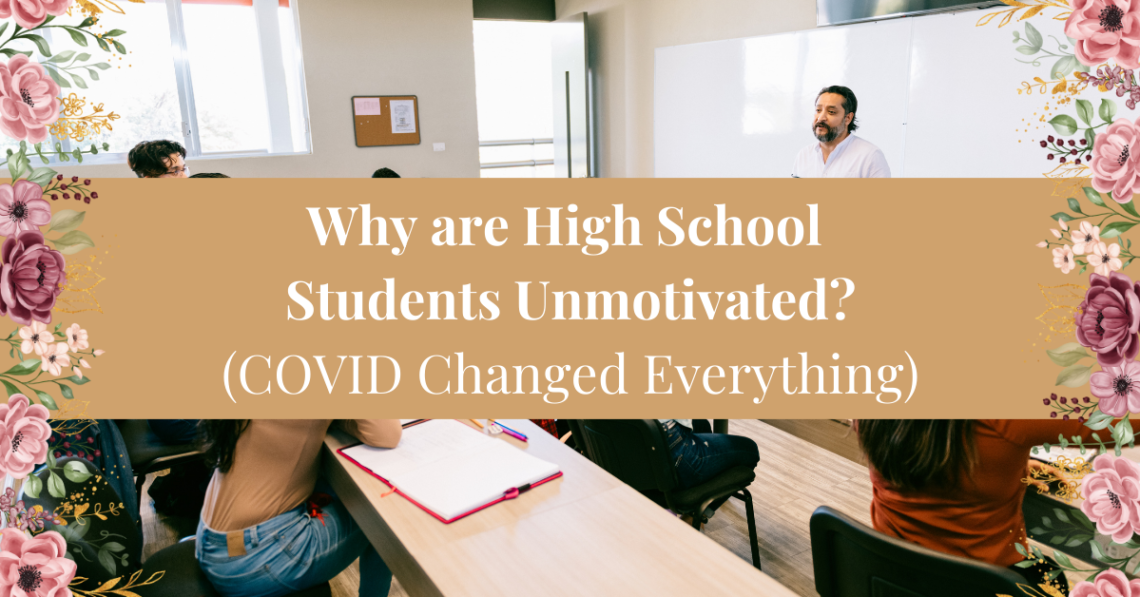
So why are high school students unmotivated right now? From my vantage point in the classroom, here’s what I see.
1. They Learned That School Was… Optional
During COVID, school fundamentally changed.
Deadlines were flexible. Attendance was inconsistent. Grading policies softened. Many students passed classes with minimal engagement simply because the world was in crisis.
That grace was necessary at the time.
But the long-term impact? Students internalized a new narrative: school can bend. Requirements can flex. Consequences aren’t always immediate.
For students who spent formative years in that environment, returning to structure felt abrupt. Expectations didn’t just increase — they felt foreign.
Some students never fully recalibrated.
So when we see apathy, sometimes it’s not resistance. It’s recalculation. They are adjusting to a system that once loosened its grip.
2. Their Stamina Decreased
This is one of the most noticeable shifts I’ve experienced.
Before COVID, students could sustain attention longer. They were used to full days, consistent routines, and extended mental effort.
Now? Many struggle to focus for even short stretches.
During lockdown, screens became everything:
- School
- Social life
- Entertainment
- Connection
Learning shifted to shorter bursts, asynchronous tasks, and independent pacing. Deep work wasn’t always required.
Coming back into physical classrooms required academic stamina many hadn’t practiced in years.
And stamina isn’t rebuilt overnight.
What looks like apathy is often fatigue — cognitive fatigue, emotional fatigue, digital fatigue.
3. Anxiety Is Higher — and Motivation Suffers When Anxiety Rises
Post-COVID classrooms carry a different emotional weight.
Students today are more open about anxiety, depression, and mental health struggles — which is a positive shift culturally. But increased anxiety impacts motivation dramatically.
When a student is overwhelmed:
- They procrastinate.
- They avoid.
- They shut down.
Sometimes “I don’t care” really means “I’m afraid I won’t do this well.”
Add in global instability, social pressure, and constant access to distressing news through social media, and you have a generation carrying more background stress than many of us did at their age.
Motivation requires emotional bandwidth. Many students are operating on low reserves.
4. Instant Gratification Is Competing With Long-Term Effort
This isn’t entirely new, but it intensified during COVID.
TikTok, short-form content, gaming, streaming — all of it increased dramatically during lockdown. Algorithms are designed to reward instantly and continuously.
School, on the other hand, requires:
- Delayed gratification
- Incremental progress
- Effort before reward
When students are accustomed to immediate dopamine hits, academic persistence feels slow and unrewarding.
It’s not that they can’t work hard. It’s that the comparison between effort and instant entertainment is stark.
And that constant comparison affects motivation.
5. Accountability Feels Different
Another post-COVID shift I’ve noticed is how students respond to accountability.
Some are more sensitive to correction.
Some disengage quickly when confronted.
Some shut down at the first sign of struggle.
During remote learning, many avoided immediate feedback. Cameras were off. Microphones were muted. Participation was easier to escape.
Now, being called on, being corrected, or being held accountable feels more intense.
For some students, avoiding effort feels safer than risking visible failure.
6. They Missed Key Developmental Years
This might be one of the most important pieces.
Students who are juniors and seniors now were freshmen and sophomores during COVID. They missed:
- Normal transitions into high school
- Structured social learning
- In-person collaboration skills
- Traditional rites of passage
Those years matter developmentally.
High school isn’t just academic growth — it’s social growth, emotional growth, identity formation. Interruptions during those years have ripple effects.
Some students are academically behind.
Others are socially less confident.
Some are still learning how to “do school” in person.
What looks like apathy may sometimes be delayed development.
7. Their View of the Future Shifted
COVID disrupted the illusion of certainty.
Students watched:
- Graduations canceled
- Sports seasons disappear
- Family members lose jobs
- Plans unravel
For some, long-term planning feels less stable now.
If the future feels unpredictable, long-term academic investment can feel less urgent.
Motivation thrives when students believe effort today leads to a stable tomorrow. That connection feels less concrete for some post-COVID teens.
8. We Changed, Too
This part is important.
Teachers are more tired than we were. Many of us are still recovering emotionally from the pandemic years.
Our expectations may have shifted. Our energy may fluctuate more. Our patience may be thinner some days.
Students sense that.
The classroom is a relational ecosystem. When one part changes, everything adjusts.
Acknowledging that we’re navigating change alongside them helps us approach the situation with humility instead of frustration.
9. So What Do We Do About It?
Understanding why high school students are unmotivated doesn’t solve everything — but it reframes the problem.
If apathy is rooted in:
- Fatigue
- Anxiety
- Skill gaps
- Developmental disruption
- Shifting cultural norms
Then yelling about responsibility won’t fix it.
What might help?
Rebuilding stamina slowly.
Being explicit about expectations.
Teaching time management intentionally.
Providing structured success.
Balancing high standards with support.
Focusing on relationship and connection.
It also means being patient with the rebuilding process.
This generation isn’t broken.
They’re recalibrating.
10. There Is Still Hope
Here’s what gives me hope.
I’ve seen students rise to the occasion when they:
- Feel believed in
- Experience small wins
- See purpose in the work
- Build confidence gradually
I’ve seen apathetic students become engaged when someone took time to understand them.
I’ve seen resilience grow slowly.
The post-COVID student isn’t less capable.
They are navigating a different world than we did.
And while motivation looks different right now, potential is still there.
Final Thoughts
Why are high school students unmotivated?
Because the world shifted.
Because routines were disrupted.
Because anxiety increased.
Because instant gratification competes loudly.
Because development was interrupted.
Because the future feels less predictable.
And because they are still learning how to be students again.
Instead of asking, “Why don’t they care?” I’m learning to ask, “What do they need to care again?”
That question changes my tone.
It changes my posture.
It changes my classroom.
The rebuilding of motivation may take time. But I believe it’s possible.
Let’s Learn From Each Other
If you’ve been teaching before and after COVID, you’ve likely felt the shift too.
What changes have you noticed in your students?
Do you think motivation looks different now?
What strategies have helped you rebuild engagement in your classroom?
Share your thoughts in the comments below. Your experience might help another teacher feel less alone in navigating this new educational landscape.
We’re all adjusting together. And together, we’ll keep learning how to teach the students in front of us — not the ones we used to have.